Architecture in Crisis

In light of the recent 2 week’s financial news I have been a little preoccupied with reading the news blogs and playing fake day-trader on updown.com and have not found many articles to write about. That being said, I would like to write an extra special post detailing how an economic collapse, or at least a shaky market, will affect the architecture world as we know it. Unfortunately I do not have the knowledge or research to make any grand predictions or explanations. Instead, i will just make my own observations.

Here goes the list of things that we might see happen due to recent economic events:

  1. Due to a decrease in speculative lending, new construction loans will become harder to get, and many private commercial projects will be tabled.
  2. Because of the economic slow down there will be less capital and therefore less commercial growth, so the drop in commercial projects will be compounded by their being less demand. This may be beneficial to the projects that do seek financing, because there will be less fingers in the pie
  3. Less commercial growth, in turns creates less personal disposable income and reimbursable business expenses. This can translate to a slow down in hospitality construction and restaurant and entertainment interiors jobs.
  4. Less commerce, means less jobs, and in turn that means less of a likelihood of a turnaround in the housing market, because there will be fewer buyers with enough savings to qualify for the new restrictive loans. This will hurt the multifamily and mixed use development architects.
  5. A smaller housing market and lower property values mean that municipalities will have a lower tax revenue stream and public use building contracts may start to dry up.
  6. With 401(k)s and IRA’s and housing prices in the toilet, baby boomers may need to wait to retire. This means the assisted living and retirement community developers will be hit hard. On the other hand, with a graying population staying home, the suburbs will need to be retrofit to accommodate the newly elderly and infirm. Couple this with a drop in housing prices and more people finding ways to make their current houses work for their needs, and this means architects who focus on home renovations probably will see a rise in productivity.
  7. In addition to retirement savings, college savings accounts may be hit hard. This may mean smaller enrollment numbers for private universities and larger applicant pools for state schools. In addition, tightening of purse strings equates to less donations for private universities. Together this may mean less collegiate jobs on the table, and those that are available will be for state institutions who need to expand capacity on a shoestring budget
  8. I do think we will see growth in two other sectors beyond home renovation, they are sustainable and environmentally conscious design and institutional (prison and health care). Sustainable design will be a necessity as people look at ways to decrease their monthly expenditures. This will work in cooperation to the home renovation boom; people will replace windows for more efficient glazing, switch to tankless water heaters and solar hot water, and look at domestic energy production as ways of increasing their property value and decreasing their quotidian expenses.
  9. Prison construction and hospital construction and/or repair and renovation will increase for two reasons. First, with recessions come crime waves (the need for more correctional facilities) and a greater demand on the health care infrastructure. With more unemployed workers, there will be less people with health care. These individuals may not seek medical treatment until an issue becomes an emergency. In addition, the stress of a recession could cause emotional trauma – depression and mental health disorders. All of this will stress the existing system. Secondly, the government may look for ways to provide labor for the unemployed, a la the WPA, and, transportation infrastructure aside, hospitals, prisons, and other larger public use projects are the best use of these funds.

Again, this is just what I see when I look at the tangled web of finance and its relationship to the profession of architecture. I am sure other people will be glad to point at the ways i am wrong.
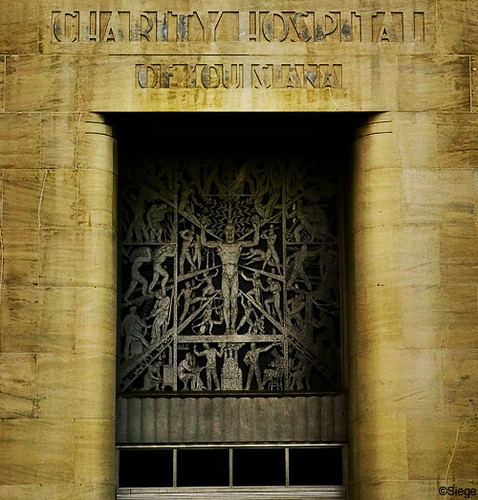
Charity Hospital: Don’t hold your breath.

A good friend of mine from architecture school who is involved in the process of building the new Charity Hospital sent me an update on the old building’s situation. Selections from her response below:

[A]s I work at the firm that did the storm damage and the new packages to get the work done to fix the MYRIAD of problems just from the storm itself with FEMA I can pretty much tell you this: that building will never again be a hospital. According to the codes necessary for health care there is no way for that building to reach code for less than a couple more million than they’re going to spend on the new one. In addition the amount of asbestos and mold inherent in the HVAC and wall systems, due to the materials used last time they renovated that building, stack another couple to 30 mil on. It’s not a cheap building to fix for anything, especially for something as specific as a hospital. Which is why they are pouring 10.2 billion dollars (most likely plus) into the new LSU/Charity Hospital …

[P]eople can make noise as much as they want about it being done faster with a [renovation] to the old buildings, but it took a team of over 100 people 3 years just to get the contracts out to bid to get the roofing fixed …

[N]o matter how much we may want them to save the old hospital don’t count on anyone ever having enough money to fix that building, count on the new one getting built…

It looks like the building might have more of a chance being bought by a developer and turned into condos than being brought back to life as a hospital. I have to wonder if it would be possible to turn this building into a museum focusing on health care and hurricanes – maybe house a couple of different museums? I hope that whatever happens, this building remains a part of the urban landscape. It is one of the few Art Deco Buildings in the city, and unless it gets some federal backing and protection as a historic property it may go the way of the Rivergate.

Charity Hospital: Back from the dead?

Charity Hospital - New Orleans

[Image © adrastosno all rights reserved.]

This is a bit of really good news! Over at PreservationNation it seems that there is some discussion by RMJM Hillier about rehabilitating Charity Hospital in New Orleans. This 1938 Art Deco building always reminded me of a little bit of Gotham City in the heart of the Crescent. Besides its architectural good looks, I knew many a service industry worker without health care who were able to be treated here without having to worry about repayment, and quite a few LSU medical school students who trained here. In addition, I had a number of friends in the Tulane EMS squad, and they always told me that if I got shot, to ask the ambulance driver to bring me to charity, because they had the best gunshot trauma ward in town.

It remains to be seen if this will ever see the light of day, and in addition, if it does how preservation sensitive the rehabilitation will be.

Farnsworth House 1 Global Warming 1

Flood Damage at Farnsworth House

[Image courtesy of the National Trust for Historic Preservation via PreservationNation.]

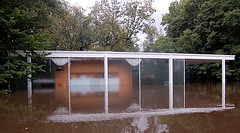
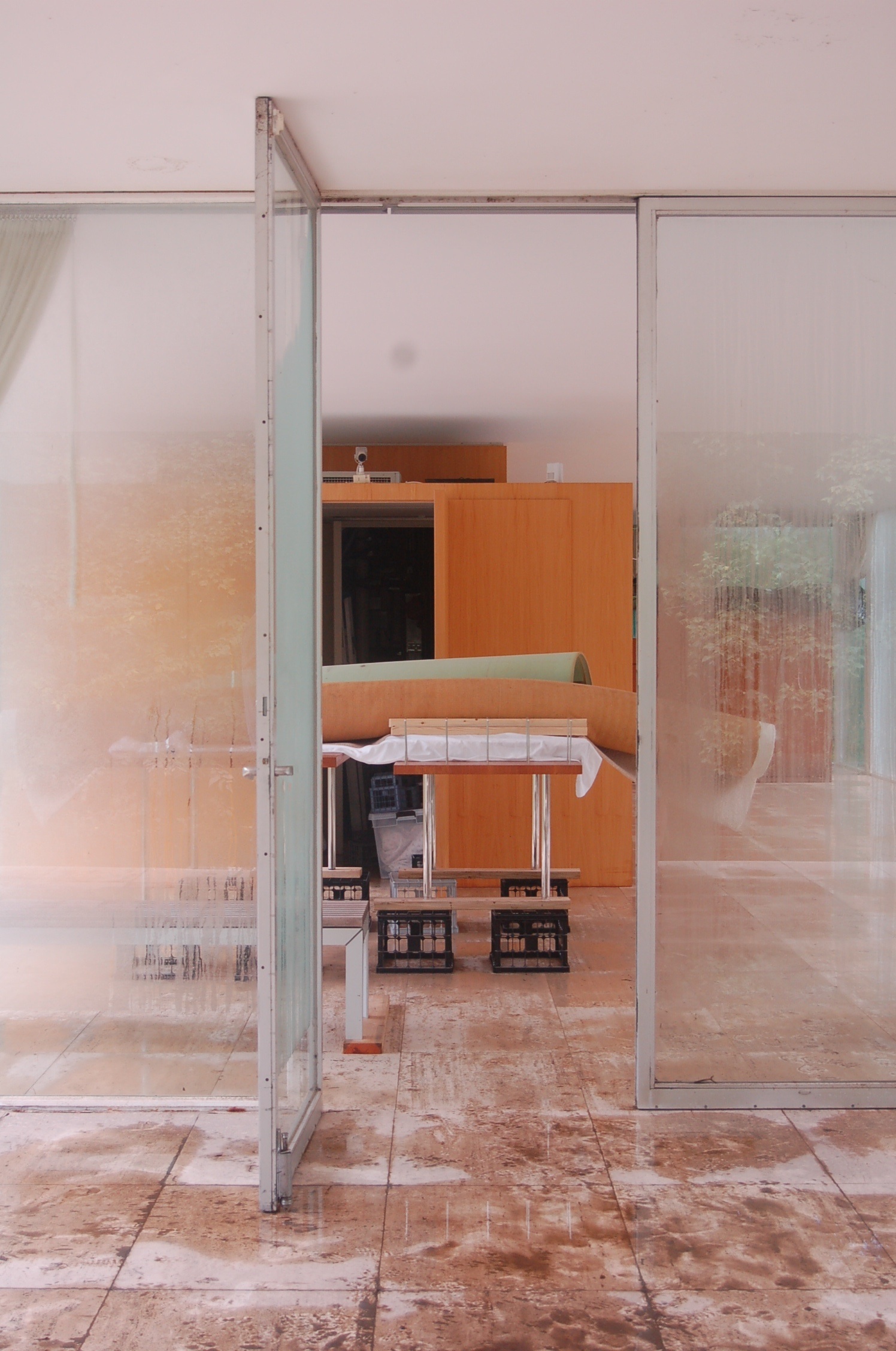
Today I received an e-mail from The National Trust for Historic Preservation giving me an update on the condition of the Farnsworth House, a piece of seminal modern architecture by Mies van der Rohe. The flood waters have receded, but as you can see in the above photo, there is as expected water and mud damage. The glass windows/walls are intact, as are the travertine floors; the primavera wood panels from the living room were rescued, but much of the built in wood has suffered water damage. The extent of the restoration process is yet to be determined, but because of the large scale damage clean up operations in the area the process will be slow. The full story can be found at PreservationNation.

Donations are welcomed and greatly appreciated. If you want to help, visit Landmarks Illinois and the National Trust for Historic Preservation. The Farnsworth House is owned by the National Trust for Historic Preservation and is managed by Landmarks Illinois.

Farnsworth House 0 Global Warming 1

farnsworth house - flooded

[Image via 33 and a Third.]

Due to unusually heavy rains and flooding caused by the remnants of Ike and Lowell, Mies van der Rohe’s Farnsworth House has 1 foot of standing water in it, according to the National Trust’s Blog PreservationNation. The house is built 5′ off of the ground, so that means there 6′ of flood water. Hopefully, when the water subsides, the damage will be able to be repaired. Donations can be sent here.

This should serve as a reminder to everyone that even though increased hurricane and tropical storm activity mainly affects the coasts, once these storms make in inland, they still drop a lot of water. As storms get stronger and more common there will be more flooding in the nation’s rivers and streams. We are all effected by global climate change.

Folded Landscapes

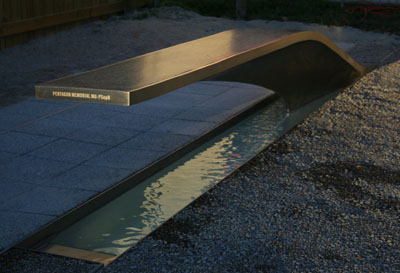
Light Bench at the new Pentagon 9/11 Memorial

[Image via Pentagon Memorial Fund.]

Today is the opening of the 9/11 memorial at the Pentagon in Arlington, VA. The major news agencies are all carrying the story and are depicting the whole emotional and nationalist side of this event. What interests me here is the architecture. The memorial consists of a field of trees with “light benches” folding out of the ground. These folded planes are each dedicated to a person who died in the pentagon and the plane that crashed there.

The imagery here strikes a chord with me.  This method of landscape design, stitching lines in the ground and then folding planes, is something that I feel quite versed in.  This is a design strategy that I employed in two different projects in design school.  On that note, I have to say that from the photos I’ve seen I think this jobs has been well thought out and implemented.  This method of landscape structuring has become more common since its use in the Vietnam memorial by Maya Lin, but in this project it has been brought down in scope from one large gesture to many small personal gestures.   Though I wish there was no reason for it to exist, I look forward to visiting this memorial some day soon.

Concrete Column – Image Post

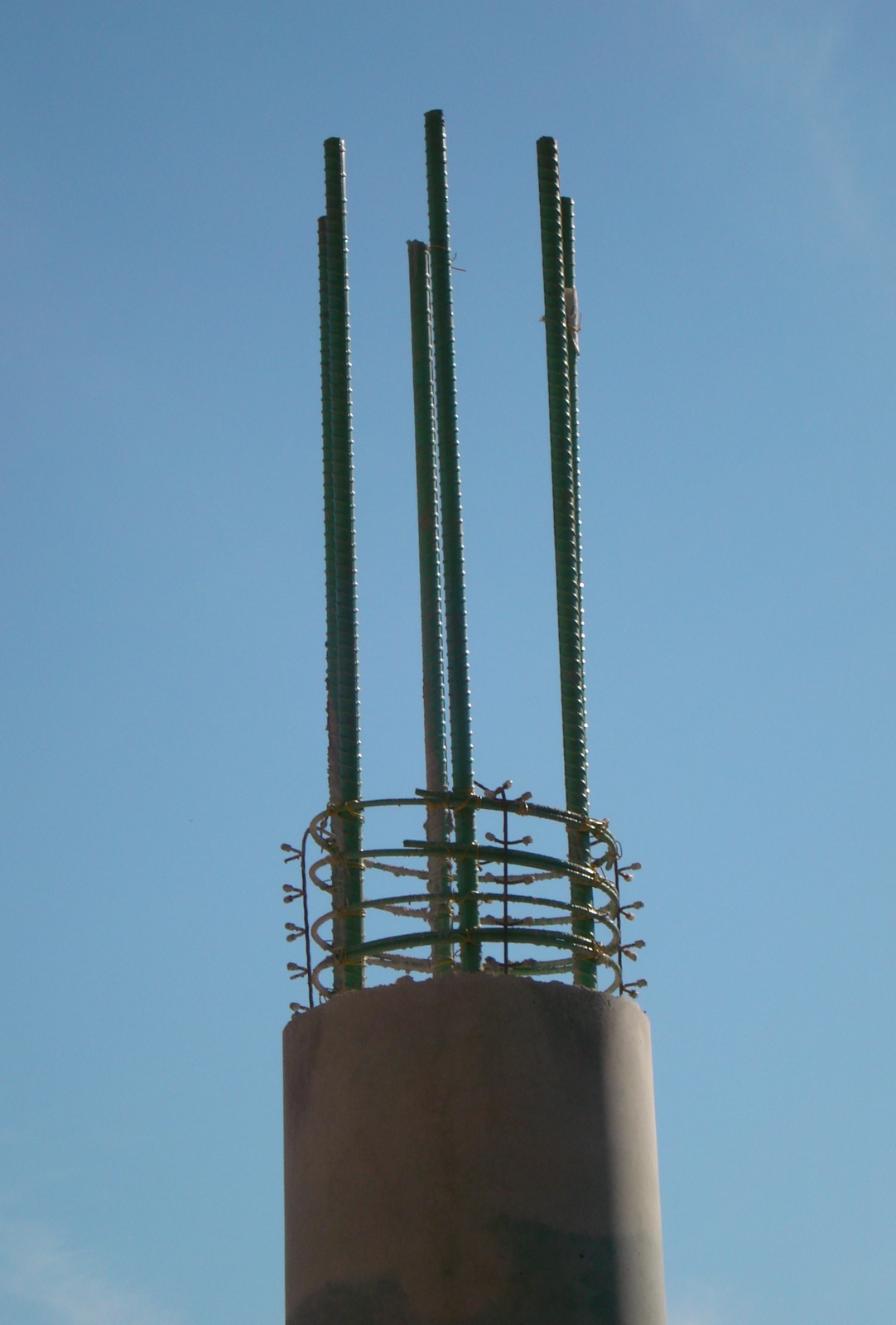
An unfinished concrete column I observed in DC
An unfished poured concrete column – It looks like a hand reaching towards the sky.

Brick Ledge – Image Post

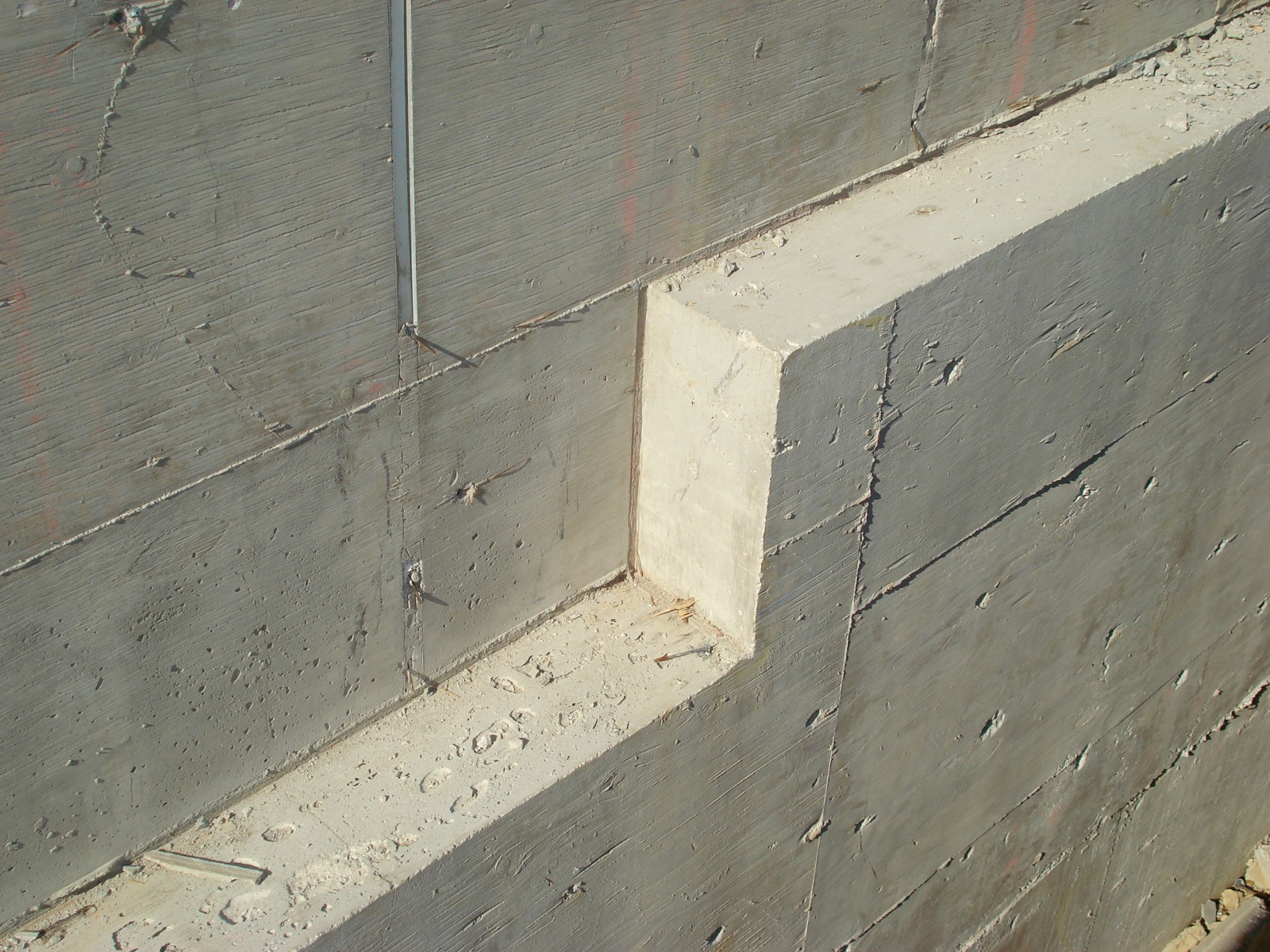
A brick ledge in a cast concrete wall I observed in DC
A brick ledge in a poured concrete wall – It looks like the wall has been shifted inward.