Its been over three years since I moved to Northern Virginia and said good bye to my friends and Alma Mater in New Orleans. How was I to know that 3 months later the world would end and everything New Orleans would be measured in relevance to Katrina. Now, as we welcome in year 3 PK, New Orleans is facing the possibility of another major disaster. It is my hope of hopes that Gustav does not undo all the rebuilding and planning that have happened in the past three years. If the worst happens and the city is deluged again, I worry that the country will not be as generous as last time; I can already hear them crying on the senate floor for abandonment and rebuilding elsewhere. I can see the talking heads blaming New Orleans for not “learning its lesson,” as if the city had not been flooded numerous times in its past. If the money does come again, I can just imagine the repressive building codes to and flood plane restrictions, all methods of preventing future loss of property. Yet the city would become one big concrete block raised 40 feet in the air. How can we [...]

As a former resident of New Orleans, Tulane School of Architecture alumni, a preservationist, and as a future architect I implore you to stop the destruction of modernist buildings in New Orleans. Ever since the Vieux Carré Commission stood up to Robert Moses and the original planned route for I-10, there has been an understanding in New Orleans that its buildings are the presents physical link with the city’s history, and that history and tourists desire to explore it and embrace it has been the economic engine that has allowed rebuilding to be a possibility. If there has been one place that preservation has failed in New Orleans, it is in regards to Modernist architecture. The city was done a historical and architectural disservice with the destruction of the Rivergate, a building that was unique in New Orleans’s architectural landscape. We now stand on a precipice, the bulk of the schools scheduled to be closed and demolished are some of the few examples of southern regional Modernism in New Orleans. With their destruction we stand to lose a huge part of our architectural and cultural history. In addition, by demolishing the schools we are only contributing more waste to the [...]

After watching the latest episode of Architecture School I was struck with just how accurate of a portrayal the reviews seemed. I remember reviewers baiting students just like that, and verbally backing them into corners such that they were forced to say their design was bad. What was missing from this was the critics literally tearing apart models to express their disgust with the scheme. I stand by my previous opinions about the student’s work, none of them responded to the scale of the neighborhood adequately. At least some of them were looking at filtering elements of New Orleans housing iconography through a modernist lens, specifically the front porch and the screening elements. Furthermore, most of the house strategies did not create any site strategies for creating a public/private separation outside of the house itself.

While reading other responses to Architecture School, i stumbled upon the conversation at Veritas et Venustas and felt compelled to add my 28 cents. I have reprinted my response below. As a Tulane School of Architecture alumnus (’05) I feel a need to chime in with a few points. 1) There was, and i assume still is, an underlying conflict in the school and architecture as a whole. There are those modernist professors who put an emphasis on partis and design over neighborhood scale and character and they are continually in conflict with the preservationists/critical regionalists who emphasis context and character over grand design strategy. This studio would have been better suited being under the purview of a non-modernist professor, whose emphasis would have been on neighborhood development instead of personal architectural statements. 2) The problem with the existing houses and the neighborhood’s reaction is multifaceted. There is a severe air of distrust in New Orleans between the poor black neighborhoods and the rich (mostly) white gentry for very good reasons. The horrendous housing projects that were built during urban renewal were dehumanizing spaces (many not much better than stacked slave cabins), the construction of which allowed for the forced [...]

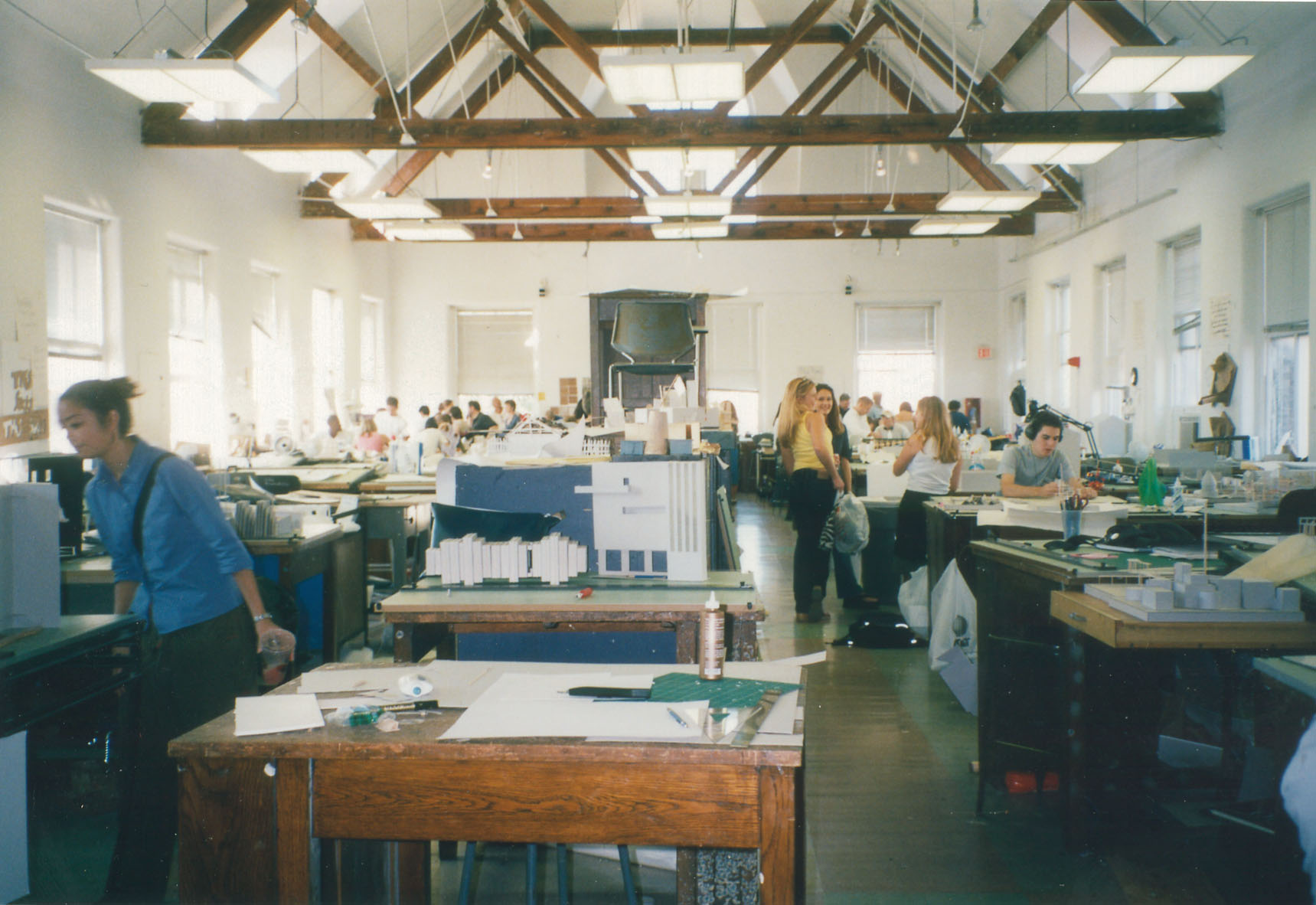
So I just got done watching the first episode of Sundance Channel’s Architecture School. I have to say, for the first reality TV depiction of the world of architecture education, and especially the Tulane variety, it is starting out as a decent representation. They managed to capture the ever condescending tone that most professors use towards their students as well as the tensions between rich and poor, black and white, and Tulane and the city; issues that have always inhabited New Orleans even before Katrina. I have to say, one of the things that is severely missing is the sense of height and lack of air conditioning in the architecture building – Richardson Memorial Hall, and the oppressive humidity that I am sure is plaguing these students in the field. With it being the first 2 weeks of the semester, it has to either be august or January and it doesn’t really look like they are dressed for January in New Orleans. C’mon Sundance Channel, where are my sweaty dehydrated daiquiri sipping architecture students? Let me also add, that it is totally surreal to watch not only people that you know but buildings that used to be central to your [...]

This Sunday the Washington Post ran two different architecture/design articles, one about the MoMA prefab housing exhibit – “Home Delivery: Fabricating the Modern Dwelling” and the other about IKEA’s new catalog and its pastiche of Modern and Classic styles.

Both articles dwell on the nature of consumerism and mass production in our modern world, but from highly different angles. Philip Kennicott is quite deliberate in his discussion of the evolution of manufactured housing, from the early portable emigrant cottages through the era of Sears and Roebuck to the famed Modernists (with a capital “M”) Le Corbusier and Moshe Safdie and on through a contemporary piece designed by Richard Horden and Haack + Hoepfner Architects. Through this history lesson he also grapples with the two sides of pre-manufacturing/pre-fab, the mass produced bland utilitarian home and the architectural object d’art democratized and brought within the public reach. In the end he ends up questioning whether pref-fab can ever really be the answer to the Design like you Give a Damn movement, or if it will be the next wired-tired-expired status symbol.

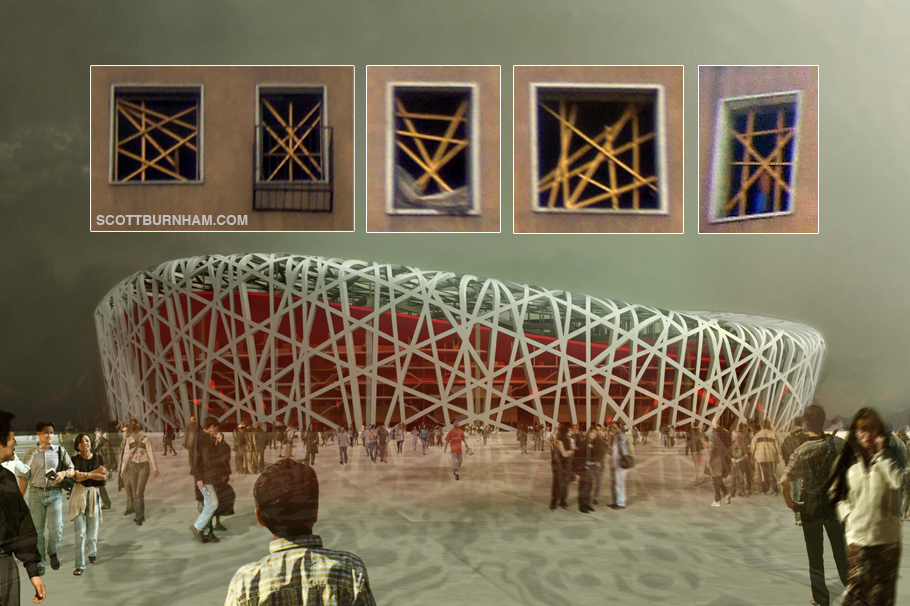
SCOTT BURNHAM has a realy good post about the Beijing Stadium. He contends that the now ubiquitous “Bird’s Nest” shows a striking similarities to the improvised safety screening that Chinese migrant workers erect in buildings. This woven mesh of slates IS eerily similar to the form of the outer skin on Herzog & de Meuron’s Stadium.

The AIA website has an interesting article on the future of the architectural process.   This is something that greatly concerns me.   As the office I work for, and many others, contemplate moving to BIM there are great changes that will need to be made in house.   Not only will the time required for tasks change, but the general break up of time will shift more heavily towards the beginning.   The most interesting thing about this article is that it discusses a the change in nomenclature: Predesign becomes conceptualization Schematic design becomes criteria design Design development becomes detailed design Construction documents become implementation documents Agency review begins at conceptualization Bidding becomes buyout Construction is still construction By changing the language of phases, it makes it easier to break away from old contracts dictating time ratios, and forge a new understanding about how Integrated Project Delivery and BIM will affect billing and management. [W O R D S B Y...Integrated Project Delivery and the Fully Engaged Emerging Professional]

Here are some links to articles that have peaked my interest in the last few days: ‘Can of ham’ to rival Foster’s Gherkin – Building What is it with Londoners and buildings that look like food? I am waiting for the Yorkshire pudding building, or the spotted dick building. FreshWater House by Chenchow Little Architects | CoolBoomThis is a nice little piece of critical regionalism. The shutter walls are really genius way of bringing operable shutters to a contemporary design style. In addition the bundle of sticks element of the architecture thoroughly responds to the beach setting. 19th century Western town layout: myth vs reality | Cyburbia – urban planning communityCyburbia has an interesting discussion on the depiction of frontier/western towns in cinema and in real life. I find the discussion of early planning and zoning and false fronts very interesting. AIA Deconstructs Green-Building Standards| News | Architectural RecordArchitectural Record has an article about the AIA’s analysis of three different green building standards: LEED 2.2, Green Globes, and SBTool 07.

The New York Times has a write up about this house which is built on an Island in Naraganset Bay. The views from the house are amazing, water views from every window, this is owing to its placement – perched all alone on a tiny rock of an island. Apparently it was a wreck when it was bought by a pair of Boston architects in 1961, one of whom was a distant relative of the original builder. For the past 4 decades they have restored and renovated the house and it is still a work in progress. [Who Lives There - Clingstone - The Old House and the Sea - NYTimes.com]

© 2011 selophane.blog Suffusion theme by Sayontan Sinha